Curriculum Intent: English - Writing

Our Curriculum Drivers

Characteristics of a Writer
- The ability to write fluently and with interesting detail on a number of topics throughout the curriculum.
- A vivid imagination which makes readers engage with and enjoy their writing.
- A highly developed vocabulary and an excellent knowledge of writing techniques to extend details or description.
- Well-organised and structured writing, which includes a variety of sentence structures.
- Excellent transcription skills that ensure their writing is well presented and punctuated, spelled correctly and neat.
- A love of writing and an appreciation of its educational, cultural and entertainment values.
Implementation
Our pupils should be able to organise their knowledge, skills and understanding around the following learning hooks:
- To present neatly
- To spell correctly
- To punctuate accurately
- To use sentences appropriately
- To write with purpose
- To use imaginative description
- To organise writing appropriately
- To use paragraphs
- To analyse writing
- To present writing
These key concepts or as we like to explain them to children – learning hooks, underpin learning in each milestone. This enables pupils to reinforce and build upon prior learning, make connections and develop subject specific language.
A copy of our writing progression within the Write Stuff can be found here. Additional information regarding EYFS progression can be found here.
The vertical accumulation of knowledge and skills from Years 1 to 6 is mapped as follows:
|
Threshold Concept Key Skills |
Milestone 1 Years 1 and 2 |
Milestone 2 Years 3 and 4 |
Milestone 3 Years 5 and 6 |
|
To write with purpose |
• Say first and then write to tell others about ideas. • Write for a variety of purposes. • Plan by talking about ideas and writing notes. • Use some of the characteristic features of the type of writing used. • Write, review and improve. |
• Use the main features of a type of writing (identified in reading). • Use techniques used by authors to create characters and settings. • Compose and rehearse sentences orally. • Plan, write, edit and improve. |
• Identify the audience for writing. • Choose the appropriate form of writing using the main features identified in reading. • Note, develop and research ideas. • Plan, draft, write, edit and improve. |
|
To use imaginative description |
• Use well-chosen adjectives to add detail. • Use names of people, places and things. • Use well-chosen adjectives. • Use nouns and pronouns for variety. • Use adverbs for extra detail. |
• Create characters, settings and plots. • Use alliteration effectively. • Use similes effectively. • Use a range of descriptive phrases including some collective nouns. |
• Use the techniques that authors use to create characters, settings and plots. • Create vivid images by using alliteration, similes, metaphors and personification. • Interweave descriptions of characters, settings and atmosphere with dialogue. |
|
To organise writing appropriately |
• Re-read writing to check it makes sense. • Use the correct tenses. • Organise writing in line with its purpose. |
• Use organisational devices such as headings and sub headings. • Use the perfect form of verbs to mark relationships of time and cause. • Use connectives that signal time, shift attention, inject suspense and shift the setting. |
• Guide the reader by using a range of organisational devices, including a range of connectives. • Choose effective grammar and punctuation. • Ensure correct use of tenses throughout a piece of writing. |
|
To use paragraphs |
• Write about more than one idea. • Group related information. |
• Organise paragraphs around a theme. • Sequence paragraphs. |
• Write paragraphs that give the reader a sense of clarity. • Write paragraphs that make sense if read alone. • Write cohesively at length. |
|
To use sentences appropriately |
• Write so that other people can understand the meaning of sentences. • Sequence sentences to form clear narratives. • Convey ideas sentence by sentence. • Join sentences with conjunctions and connectives. • Vary the way sentences begin. |
• Use a mixture of simple, compound and complex sentences. • Write sentences that include: • conjunctions • adverbs • direct speech, punctuated correctly • clauses • adverbial phrases. |
• Write sentences that include: • relative clauses • modal verbs • relative pronouns • brackets • parenthesis • a mixture of active and passive voice • a clear subject and object • hyphens, colons and semi colons • bullet points. |
|
To present neatly |
• Sit correctly and hold a pencil correctly. • Begin to form lower-case letters correctly. • Form capital letters. • Form digits 0-9. • Understand letters that are formed in similar ways. • Form lower-case letters of a consistent size. • Begin to join some letters. • Write capital letters and digits of consistent size. • Use spacing between words that reflects the size of the letters. |
• Join letters, deciding which letters are best left un-joined. • Make handwriting legible by ensuring downstrokes of letters are parallel and letters are spaced appropriately.
|
• Write fluently and legibly with a personal style.
|
|
To spell correctly |
• Spell words containing 40+ learned phonemes. • Spell common exception words (the, said, one, two and the days of the week). • Name letters of the alphabet in order. • Use letter names to describe spellings of words. • Add prefixes and suffixes, learning the rule for adding s and es as a plural marker for nouns, and the third person singular marker for verbs (I drink - he drinks). • Use the prefix un. • Use suffixes where no change to the spelling of the root word is needed: helping, helped, helper, eating, quicker, quickest. • Use spelling rules. • Write simple sentences dictated by the teacher. • Spell by segmenting words into phonemes and represent them with the correct graphemes. • Learn some new ways to represent phonemes. • Spell common exception words correctly. • Spell contraction words correctly (can’t, don’t). • Add suffixes to spell longer words (-ment, -ness, -ful and -less). • Use the possessive apostrophe. (singular) (for example, the girl's book) • Distinguish between homophones and near-homophones. |
• Use prefixes and suffixes and understand how to add them. • Spell homophones correctly. • Spell correctly often misspelt words. • Place the possessive apostrophe accurately in words with regular plurals (for example, girls’, boys’) and in words with irregular plurals (for example, children’s). • Use the first two or three letters of a word to check its spelling in a dictionary. • Write from memory simple sentences, dictated by the teacher, that include words and punctuation taught so far.
|
• Use prefixes appropriately. • Spell some words with silent letters (knight, psalm and solemn). • Distinguish between homophones and other words that are often confused. • Use knowledge of morphology and etymology in spelling and understand that some words need to be learned specifically. • Use dictionaries to check spelling and meaning of words. • Use the first three or four letters of a word to look up the meaning or spelling of words in a dictionary. • Use a thesaurus. • Spell the vast majority of words correctly.
|
|
To punctuate accurately |
• Leave spaces between words. • Use the word ‘and’ to join words and sentences. • Begin to punctuate using a capital letter for the name of people, places, the days of the week and I. • Use both familiar and new punctuation correctly, including full stops, capital letters, exclamation marks, question marks, commas for lists and apostrophes for contracted forms. • Use sentences with different forms: statement, question, exclamation and command. • Use extended noun phrases to describe and specify (e.g. the blue butterfly). • Use subordination (when, if, that or because). • Use coordination (or, and, but). • Use some features of standard written English. • Use the present and past tenses correctly, including the progressive form. |
• Develop understanding of writing concepts by: • Extending the range of sentences with more than one clause by using a wider range of conjunctions, including when, if, because, although. • Using the present perfect form of verbs in contrast to the past tense. • Choosing nouns or pronouns appropriately for clarity and cohesion and to avoid repetition. • Using conjunctions, adverbs and prepositions to express time and cause. • Using fronted adverbials. • Indicate grammatical and other features by: • Using commas after fronted adverbials. • Indicating possession by using the possessive apostrophe with plural nouns. • Using and punctuating direct speech. |
• Develop understanding of writing concepts by: • Recognising vocabulary and structures that are appropriate for formal speech and writing, including subjunctive forms. • Using passive verbs to affect the presentation of information in a sentence. • Using the perfect form of verbs to mark relationships of time and cause. • Using expanded noun phrases to convey complicated information concisely. • Using modal verbs or adverbs to indicate degrees of possibility. • Using relative clauses beginning with who, which, where, when, whose, that or with an implied (i.e. omitted) relative pronoun. • Indicate grammatical and other features by: • Using commas to clarify meaning or avoid ambiguity in writing. • Using hyphens to avoid ambiguity. • Using brackets, dashes or commas to indicate parenthesis. • Using semi-colons, colons or dashes to mark boundaries between independent clauses. • Using a colon to introduce a list. • Punctuating bullet points consistently. |
|
To analyse writing |
• Discuss writing with the teacher and other pupils. • Use and understand grammatical terminology in discussing writing: Year 1 • word, sentence, letter, capital letter, full stop, punctuation, singular, plural, question mark, exclamation mark. Year 2 • Use and understand grammatical terminology in discussing writing: • verb, tense (past, present), adjective, noun, suffix, apostrophe, comma. |
• Use and understand grammatical terminology when discussing writing and reading: Year 3 • word family, conjunction, adverb, preposition, direct speech, inverted commas (or ‘speech marks’), prefix, consonant, vowel, clause, subordinate clause. Year 4 • pronoun, possessive pronoun, adverbial. |
• Use and understand grammatical terminology when discussing writing and reading: Year 5 • relative clause, modal verb, relative pronoun, parenthesis, bracket, dash, determiner, cohesion, ambiguity. Year 6 • active and passive voice, subject and object, hyphen, synonym, colon, semi-colon, bullet points. |
|
To present writing |
• Read aloud writing clearly enough to be heard by peers and the teacher. • Read aloud writing with some intonation. |
• Read aloud writing to a group or whole class, using appropriate intonation. |
• Perform compositions, using appropriate intonation and volume. |
Pathways to Write
Our writing curriculum is designed using a text-based approach to help pupils acquire the necessary knowledge of grammatical structures and text types in an engaging and accessible way. This also helps to provide pupils with the desire to write and apply their knowledge and skills. The texts are carefully selected on the basis of their literary merit and to ensure an appropriate level of challenge. They also relate to our school values and the wider curriculum for each year group.
We aim to develop pupils into confident, positive and enthusiastic writers, with the intention that they will be able to write independently with resilience. It is our ambition that pupils will be able to edit and evaluate their own writing to make it the best work it can be, applying a wide range of sophisticated vocabulary, spelling and grammar skills to do this effectively. It is important that our pupils develop an awareness of the audience, purpose and context, which will prepare them for their future.
Aspirations For The Future
Pupils develop an understanding of how subjects and specific skills are linked to future jobs.
Here are some of the jobs you could aspire to do in the future as a Reader and Writer:
- Publicity Assistant
- Stage Director
- Song Writer
- Entertainment Manager
- Social Media Consultant
- Cartoonist
For more careers, please visit First Careers.
Impact
Assessment
Through the explicit teaching of the Writing skills, both the teachers and the pupils assess their learning continuously throughout the lesson. Our assessment systems enable teachers to make informed judgements about the depth of their learning and the progress they have made over time.
Pupil Voice
"Each week we have a Big Write. This is time for us to apply what we have learnt through the week," - Ellenor
"I love Big Write. I try to write a full page," Alyssa
Snapshots
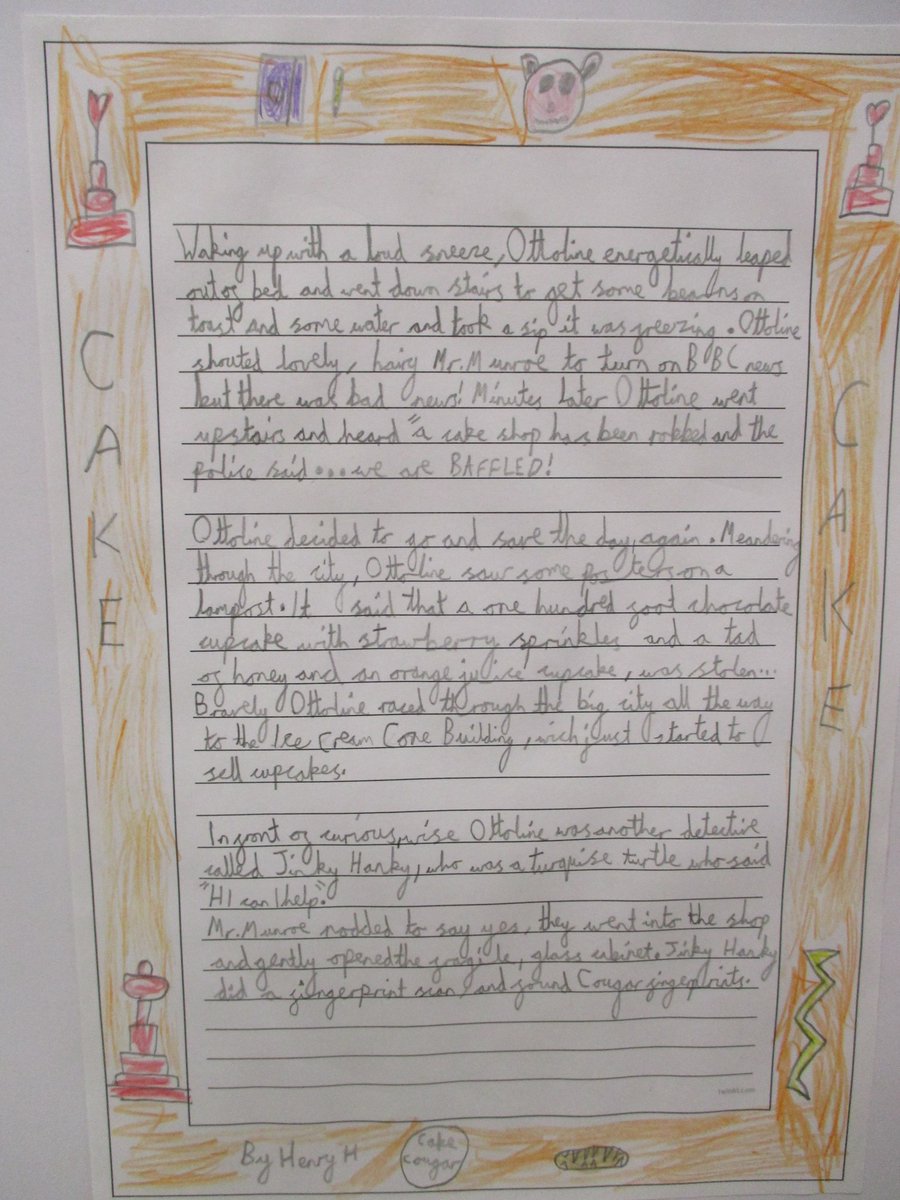
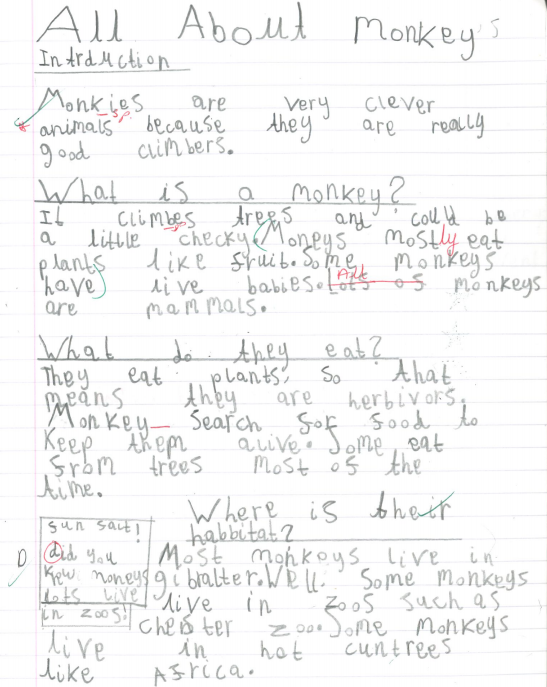
Here is what Writing looks like at The Meadows:
Disclaimer: This has been developed with reflection upon the National Curriculum (2014) and Chris Quigley’s Essential Curriculum.
From Early Years to Year 1, we follow the Rocket Phonics sequence.
Pathways to Spell
Alongside our Pathways to Write curriculum, we also use Pathways to Spell.
Aims of the programme
Pathways to Spell is a programme designed to deliver the statutory content of the Primary National Curriculum for spelling in key stages 1 and 2. Through weekly teaching of spelling objectives and development of a whole school approach to word transcription, vocabulary development and proof-reading, the programme aims to:
- Ensure that pupils become confident and competent spellers
- Enthuse and fascinate pupils about words and language
- Develop pupils spoken language skills
- Promote collaborative learning in the classroom
- Develop an engaging spelling environment across school
- Effectively reduce teacher workload with highly detailed, progressive and engaging planning for the delivery of spelling teaching
Structure and learning cycle
The Pathways to Spell programme is designed for whole class teaching of the Primary National Curriculum objectives for spelling from year 1 to year 6. It is a comprehensive and progressive
programme with a clear, research-based teaching sequence. Each week combines consolidation of previously taught spelling patterns and rules in conjunction with new teaching with opportunities to
reflect on learning. This will support pupils in development of key metacognitive strategies.
Each half term, there will be 6 weeks of detailed planning with suggestions for additional sessions focused on pupils’ personal development of spelling strategies using personalised spelling lists. They
are designed to be used for whole class teaching but sessions from previous year groups could be used as an intervention with smaller groups in addition to the whole class session.
Every year begins with consolidation of rules from previous year groups which pupils often find tricky, or commonly misspell. Each term, there is a focus on common exception or word list words
and homophones where appropriate. Each week consists of two spelling objectives: a review of a previously taught spelling pattern or rule and a mastery spelling focus – the key learning outcome
for the week.
Sessions follow a clearly structured cycle for learning across either 1 or 2 weeks, depending on the complexity of the mastery focus being covered. Each session should be timetabled to last between 20-30 minutes, with 4 sessions per week in KS1 and 3 sessions a week in KS2. Learning is sequenced in five stages as follows:

Spelling Shed
Alongside Pathways to Write, we continue to utilise Spelling Shed resources to support home learning. The focus of home learning tasks on Spelling Shed is to practise the Year 3, 4, 5 and 6 end of year expectation spellings. These are words that do not follow a set pattern and are learnt through repetition rather than rule. We have a Spelling Shed guide within this section of the website.
Spelling Shed - How To


Curriculum Intent: English - Reading

Our Curriculum Drivers
Characteristics of a Reader
- Excellent phonic knowledge and skills.
- Fluency and accuracy in reading across a wide range of contexts throughout the curriculum.
- Knowledge of an extensive and rich vocabulary.
- An excellent comprehension of texts.
- The motivation to read for both study and for pleasure.
- Extensive knowledge through having read a rich and varied range of texts.
Implementation
Our pupils should be able to organise their knowledge, skills and understanding around the following learning hooks:
- To understand texts
- To read words accurately
These key concepts or as we like to explain them to children – learning hooks, underpin learning in each milestone. This enables pupils to reinforce and build upon prior learning, make connections and develop subject specific language.
A copy of our reading progression can be found here.
The vertical accumulation of knowledge and skills from Years 1 to 6 is mapped as follows:
|
Threshold Concept Key Skills |
Milestone 1 Years 1 and 2 |
Milestone 2 Years 3 and 4 |
Milestone 3 Years 5 and 6 |
|
To read words accurately |
• Apply phonic knowledge and skills as the route to decode words. • Respond speedily with the correct sound to graphemes (letters or groups of letters) for all 40+ phonemes, including, where applicable, alternative sounds for graphemes. • Read accurately by blending sounds in unfamiliar words containing GPCs that have been taught. • Read common exception words, noting unusual correspondences between spelling and sound and where these occur in the word. • Read words containing taught GPCs and –s, –es, –ing, –ed, –er and –est endings. • Read other words of more than one syllable that contain taught GPCs. • Read words with contractions (for example, I’m, I’ll, we’ll) and understand that the apostrophe represents the omitted letter(s). • Read aloud accurately books that are consistent with phonic knowledge and that do not require other strategies to work out words. • Re-read these books to build up fluency and confidence in word reading. • Read accurately by blending the sounds in words that contain the graphemes taught so far, especially recognising alternative sounds for graphemes. • Read accurately words of two or more syllables that contain the same graphemes as above. • Read words containing common suffixes. • Read most words quickly and accurately, without overt sounding and blending, when they have been frequently encountered. • Read aloud books closely matched to their improving phonic knowledge, sounding out unfamiliar words accurately, automatically and without undue hesitation. • Re-read books to build up fluency and confidence in word reading represents the omitted letter(s). • Read aloud accurately books that are consistent with phonic knowledge and that do not require other strategies to work out words. • Re-read these books to build up fluency and confidence in word reading. • Read accurately by blending the sounds in words that contain the graphemes taught so far, especially recognising alternative sounds for graphemes. • Read accurately words of two or more syllables that contain the same graphemes as above. • Read words containing common suffixes. • Read most words quickly and accurately, without overt sounding and blending, when they have been frequently encountered. • Read aloud books closely matched to their improving phonic knowledge, sounding out unfamiliar words accurately, automatically and without undue hesitation. • Re-read books to build up fluency and confidence in word reading. |
• Apply a growing knowledge of root words, prefixes and suffixes (etymology and morphology). • Read further exception words, noting the spellings. |
• Apply knowledge of root words, prefixes and suffixes. • Read age-appropriate books with confidence and fluency (including whole novels). (Note: this should be through normal reading rather than direct teaching.) |
|
To understand texts |
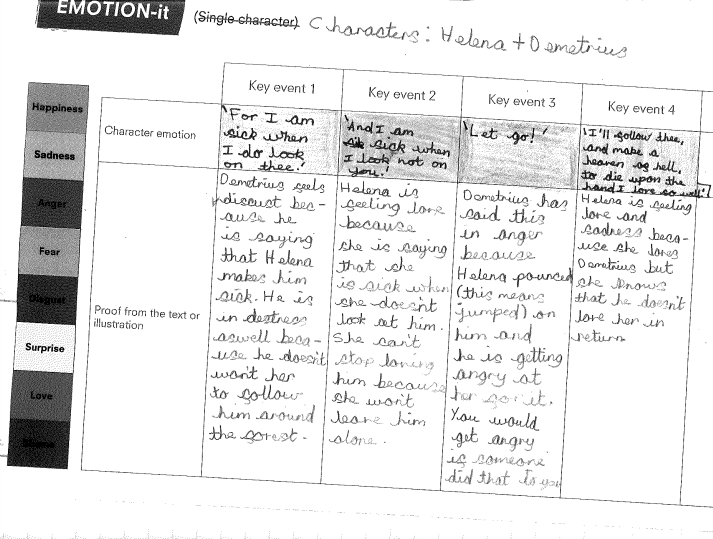
• Discuss events. • Predict events. • Link reading to own experiences and other books. • Join in with stories or poems. • Check that reading makes sense and self-correct. • Infer what characters are like from actions. • Ask and answer questions about texts. • Discuss favourite words and phrases. • Listen to and discuss a wide range of texts. • Recognise and join in with (including role-play) recurring language. • Explain and discuss understanding of texts. • Discuss the significance of the title and events. • Make inferences on the basis of what is being said and done. |
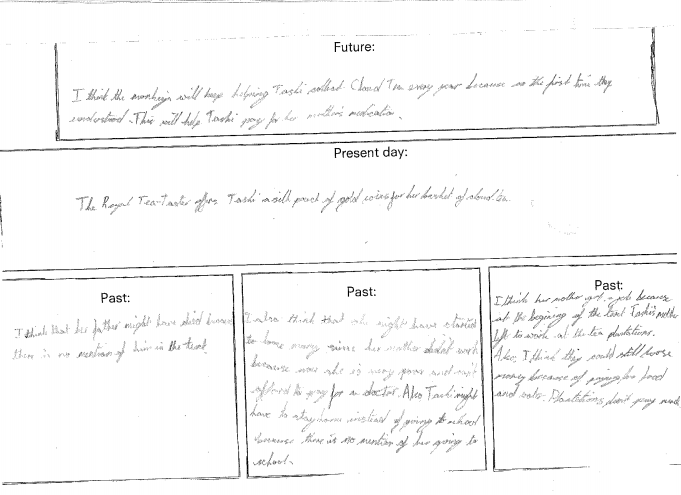
• Draw inferences from reading. • Predict from details stated and implied. • Recall and summarise main ideas. • Discuss words and phrases that capture the imagination. • Retrieve and record information from non-fiction, using titles, headings, sub-headings and indexes. • Prepare poems and plays to read aloud with expression, volume, tone and intonation. • Identify recurring themes and elements of different stories (e.g. good triumphing over evil). • Recognise some different forms of poetry. • Explain and discuss understanding of reading, maintaining focus on the topic. • Draw inferences such as inferring characters’ feelings, thoughts and motives from their actions, and justifying inferences with evidence. • Predict what might happen from details stated and implied. • Identify main ideas drawn from more than one paragraph and summarise these. • Identify how language, structure and presentation contribute to meaning. • Ask questions to improve understanding of a text. |
• Recommend books to peers, giving reasons for choices. • Identify and discuss themes and conventions in and across a wide range of writing. • Make comparisons within and across books. • Learn a wide range of poetry by heart. • Prepare poems and plays to read aloud and to perform, showing understanding through intonation, tone and volume so that the meaning is clear to an audience. • Check that the book makes sense, discussing understanding and exploring the meaning of words in context. • Ask questions to improve understanding. • Draw inferences such as inferring characters’ feelings, thoughts and motives from their actions, and justifying inferences with evidence. • Predict what might happen from details stated and implied. • Summarise the main ideas drawn from more than one paragraph, identifying key details that support the main ideas. • Identify how language, structure and presentation contribute to meaning. • Discuss and evaluate how authors use language, including figurative language, considering the impact on the reader. • Retrieve and record information from non-fiction. • Participate in discussion about books, taking turns and listening and responding to what others say. • Distinguish between statements of fact and opinion. • Provide reasoned justifications for views. |
Reading
Our reading curriculum is designed to equip pupils from EYFS onwards with key skills to move them through the reading process towards becoming competent and fluent readers. Pupils take part in whole class reading sessions following our bespoke curriculum designed using the 5 Plaques of Developing a Reader. We split texts into the following categories:
Archaic Language
The vocabulary, usage, syntax and context for cultural reference of texts over 50 or 100 years old are vastly different and typically more complex than texts written today. Students need to be exposed to and develop proficiency with antiquated forms of expression to be able to hope to read James Madison, Frederick Douglass and Edmund Spenser when they get to college.
Non-Linear Time Sequences
In passages written exclusively for students—or more specifically for student assessments— time tends to unfold with consistency. A story is narrated in a given style with a given cadence and that cadence endures and remains consistent, but in the best books, books where every aspect of the narration is nuanced to create an exact image, time moves in fits and start. It doubles back. The only way to master such books is to have read them time and again and to be carefully introduced to them by a thoughtful teacher or parent.
Narratively Complex
Books are sometimes narrated by an unreliable narrator- Scout, for example, who doesn’t understand and misperceives some of what happened to her. Or the narrator in Edgar Allan Poe’s “The Tell-Tale Heart” who is a madman out of touch with reality. Other books have multiple narrators such as Faulkner’s As I Lay Dying. Others have non-human narrators such as the horse that tells the story in Black Beauty. Some books have multiple intertwined and apparently (for a time) unrelated plot lines. These are far harder to read than books with a single plot line and students need to experience these as well.
Figurative/Symbolic Text
Texts which happen on an allegorical or symbolic level. Not reflected in Lexiles; critical forms of text complexity that students must experience. Resistant Texts Texts written to deliberately resist easy meaning-making by readers. Perhaps half of the poems ever written fall into this category. You have to assemble meaning around nuances, hints, uncertainties and clue
Alongside our curriculum, we want pupils to leave with a love of reading and books which will enrich their lives enabling them to become lifelong readers.
In every classroom, pupils are able to use the working walls as visual aids to support their learning. These are there to aid learning by providing models, vocabulary, examples or reminders. Although they will be neat and well-presented, they are not displays and the focus is on providing support for current learning rather than displaying pupils’ work.
Aspirations For The Future
Pupils develop an understanding of how subjects and specific skills are linked to future jobs.
Here are some of the jobs you could aspire to do in the future as a Reader and Writer:
- Publicity Assistant
- Stage Director
- Song Writer
- Entertainment Manager
- Social Media Consultant
- Cartoonist
For more careers, please visit First Careers.
Impact
Assessment
Through the explicit teaching of the Reading skills, both the teachers and the pupils assess their learning continuously throughout the lesson. Our assessment systems enable teachers to make informed judgements about the depth of their learning and the progress they have made over time.
Pupil Voice
"We always get opportunities for Read for Pleasure. We know it's really important so that we continue to progress in our learning" - Tilly
"Reading Explorer certificates are given out each week it to spur us on," - Henry
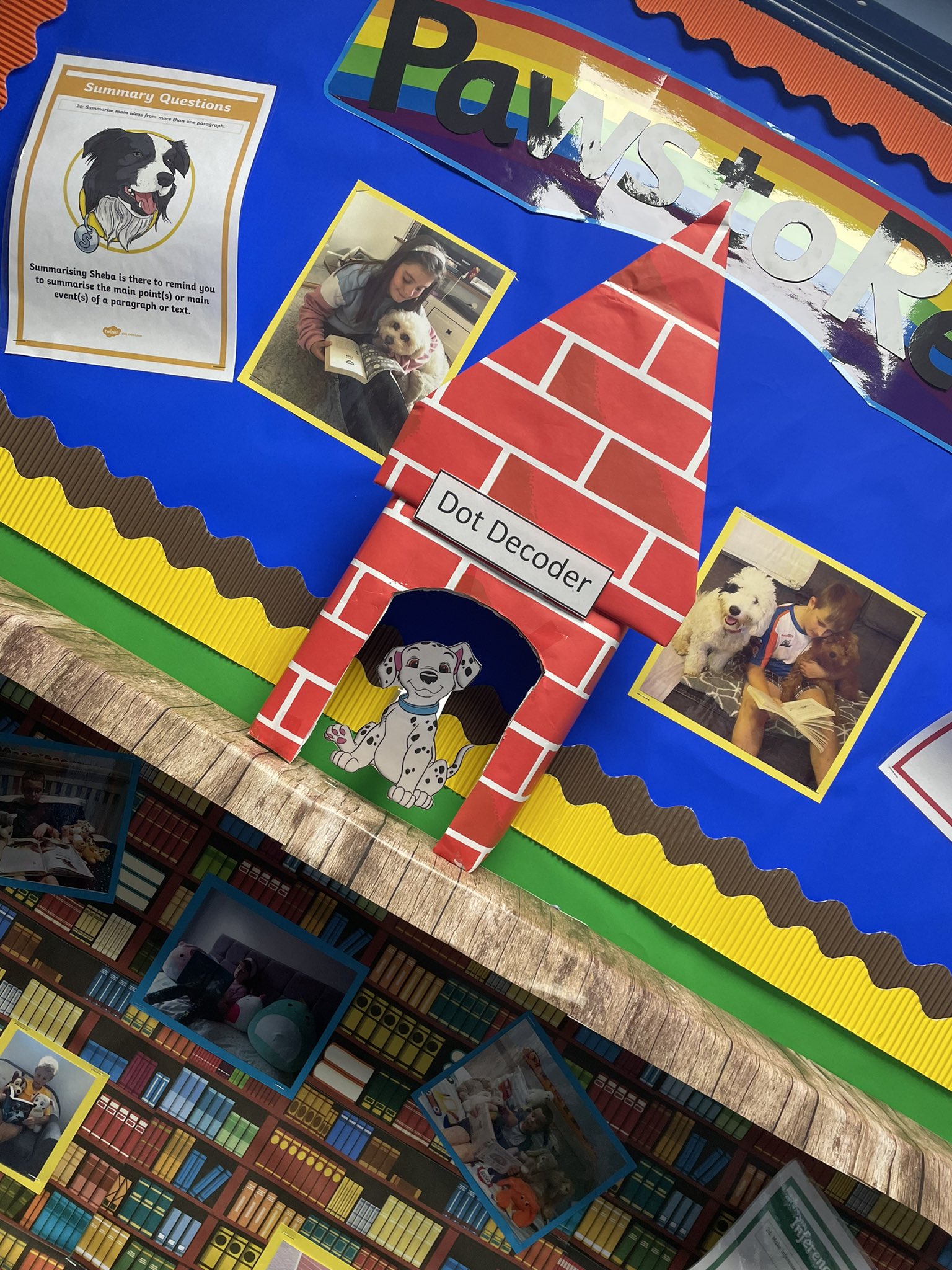
"Dot Decoder helps me read," - Jamie
Snapshots
Here is what Reading looks like at The Meadows:
Disclaimer: This has been developed with reflection upon the National Curriculum (2014) and Chris Quigley’s Essential Curriculum.
Phonics at The Meadows

As of October 2021, we will no longer be using the Letters and Sounds programme to teach Phonics within school. We have recently invested in a new systematic, synthetic phonics programme called 'Rocket Phonics'. This new resource has been written by phonics experts and will support us in teaching our pupils with their early reading and writing skills. Pupils will be given full online access to the programme which will enable teachers to assign eBooks. The eBooks will then be able to be read at school or home on any internet-enabled device.
At The Meadows, we want our children to be able to speak and write fluently in order to share their ideas and emotions with others. By the end of Key Stage 2, pupils should be able to read a wide range of texts for pleasure in order to develop culturally, emotionally, intellectually, socially and spiritually. However, a love of reading and an ability to decode texts does not happen automatically. Children need to be taught positive reading attitudes from a young age both within the home and in their learning environments. To be able to read confidentially requires a range of reading skills as detailed below.


However, while these skills are important for understanding a text fully, children must first be able to decode. This year, we have introduced a new reading dog known as:

This reading dog relates entirely to learning to decode a text with the use of Phonics. The aim of the Letters and Sounds programme is to ensure the automatic
reading of all words – decodable and tricky - to allow children to access a broad range of texts.
So... what exactly is phonics?
Words are made up from small units of sound called phonemes. Phonics teaches children to be able to listen carefully and identify the phonemes that make up each word. This helps children to learn to read words and to spell words.
In Phonics lessons children are taught three main things:
GPCs
They are taught GPCs. This stands for grapheme phoneme correspondences. This simply means that they are taught all the phonemes in the English language and ways of writing them down. These sounds are taught in a particular order. The first sounds to be taught are s, a, t, p.
Blending
Children are taught to be able to blend. This is when children say the sounds that make up a word and are able to merge the sounds together until they can hear what the word is. This skill is vital in learning to read.
Segmenting
Children are also taught to segment. This is the opposite of blending. Children are able to say a word and then break it up into the phonemes that make it up. This skill is vital in being able to spell words.
What makes Phonics tricky?
In some languages, learning phonics is easy because each phoneme has just one grapheme to represent it. The English language is a bit more complicated than this. This is largely because England has been invaded so many times throughout its history. Each set of invaders brought new words and new sounds with them. As a result, English only has around 44 phonemes but there are around 120 graphemes or ways of writing down those 44 phonemes. Obviously we only have 26 letters in the alphabet so some graphemes are made up from more than one letter.
ch th oo ay (these are all digraphs - graphemes with two letters)
There are other graphemes that are trigraphs (made up of 3 letters) and even a few made from 4 letters.
Another slightly sticky problem is that some graphemes can represent more than one phoneme. For example: ch makes very different sounds in these three words: chip, school, chef.
So why bother learning Phonics?
Phonics teaches children how to crack a code – to be able to decode text and thus giving them the tools to expand their experiences. In the past people argued that because the English language is so tricky, there was no point teaching children Phonics. Now, most people agree that these tricky bits mean that it is even more important that we teach Phonics and children learn it clearly and systematically.
When following the Letters and Sounds programme, the children build on their prior learning systematically. Each lesson follows the same consistent approach. Below you can view the progression from Phase 1 to Phase 6.
Rocket Phonics Progression
Reception

Year 1

Year 2
Phase 6
- reading the words automatically if they are very familiar;
- decoding them quickly and silently because their sounding and blending routine is
- now well established;
- decoding them aloud.
Children’s spelling should be phonemically accurate, although it may still be a little unconventional at times. Spelling usually lags behind reading, as it is harder. During this phase, children become fluent readers and increasingly accurate spellers.
How is Phonics taught at The Meadows?
Phonics sessions are snappy and engaging. They include a range of resources such as games, songs and actions. Children, very quickly, learn a range of actions to help them to decode a text. Phonics is taught as soon as the children enter Reception. Each session follows the same consistent format:
Review and Revisit
Recently and previously learned phoneme-grapheme correspondences, blending and segmenting skills as appropriate
Teach
New phoneme-grapheme correspondences; skills of blending and segmenting; tricky words
Practise
New phoneme – grapheme correspondences; skills of blending and segmenting
Apply
New knowledge and skills while reading/writing
Home learning
At The Meadows, home learning in terms of reading is a way to consolidate what has been taught in school. It is not about teaching your child how to read. They are given texts that are 90% decodable that apply the sounds they have already be taught. Each child is allocated three different books:
- A fully decodable text that applies their sound of the week (with a sticker that says 'I can read this to you')
- A decodable text to share with an adult. This is a text that is to be adult-led (this book will have a sticker 'Share this book with me')
- A reading for pleasure book. This may be a book that the children can read independently. It will not be phonetically based, but is there to encourage a love of reading and to widen their breadth of reading.
Pupil voice
"Dot Decoder helps me read!" - Jamie
"We have been learning about split-digraphs in our Phonics lessons" - Eadie
"Our reading dogs are in our classrooms to remind us" - Abigail
As you will be aware, this year we have been encouraging the children to read for pleasure. Within school, we build in time for every child to read a book of their choosing. All children are now making use of the library which has been reorganised to create a more welcoming and child-friendly environment. For more information on this, you can see our recent blogs.
Alongside this drive towards encouraging the children to explore new texts and new genres, we have also evaluated the resources that we send home to support reading. As reading is not simply about decoding, we feel these resources will help support questioning throughout the school and at home.
200 Books to Read
Below you can download a copy of the bookmarks that will support your child with reading at home. The children in KS2 can also use these to create their Canine Comment each week.
Reading Bookmarks (Canine Comments)
Resources
Here you can find resources to further support your child's reading.